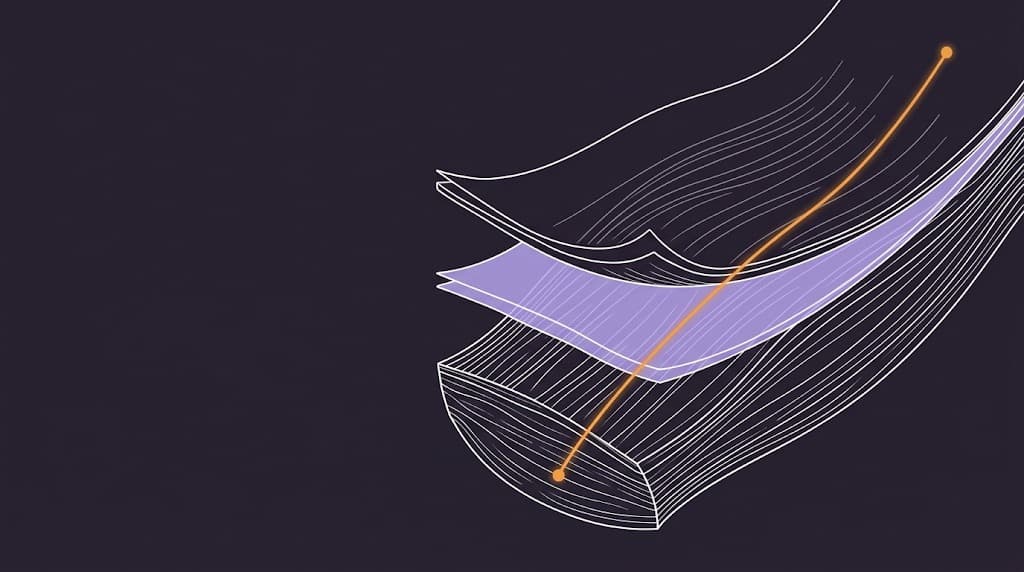
Plate III
Assessment and treatment, in a single process.
I don't treat the region that hurts because it hurts, but because I understand what is holding it there.
Sessions combine assessment and treatment in a single process. I don't treat the region that hurts because it hurts, but because I understand what is holding it there.
- 01
Listening to the story of the body
Medical history, old injuries, surgeries, hard periods. The body keeps all of them, and the order in which they happened matters.
- 02
Finding the pattern of restriction
My speciality is seeing how seemingly unrelated symptoms and events form one pattern that leads to the current presentation.
- 03
Treating the cause, not just the symptom
Fascial and visceral therapy, work with the nervous system and with how the body processes emotion, plus movement. Depending on what the case asks for.
„I don't aim to blow out the smoke, I look for the fire that causes the smoke.”
Dr. Amelia Voinea
The methods
Fascial Manipulation
Stecco method, International School
Fascia is the tissue that wraps and connects muscles, organs and nerves into one continuous network. When a portion loses its normal glide, tension travels along the chain, and pain often shows up somewhere other than its cause. The Stecco method works on precise points along these chains, selected after an assessment that compares movement across several directions.
Somatic Experiencing
SEP practitioner, trained with Liane Pinto
The nervous system keeps the pattern of an overwhelming event long after the event is over: the alarm threshold stays low, and the body stays ready for something that is no longer coming. The work follows sensation in small steps, with frequent pauses, so the system has time to settle back into a normal rhythm on its own rather than being pushed there.
Integral Somatic Psychology
ISP practitioner, trained with Raja Selvam
Emotion is felt physically: in the breath, the throat, the belly, the tension in the shoulders. ISP works with that bodily side of emotion, widening the space the body has to hold it, so it can be processed instead of held at a distance. It is used when pain persists without a structural cause that fully explains it.
Visceral osteopathic manipulation
Visceral Osteopathic Manipulation Academy
Organs move relative to each other with every breath and every step. Adhesions left after surgery, inflammation or a long period of tension can limit that glide, and the restriction is felt in the abdominal wall, the diaphragm or the back. The technique works manually, with light pressure, on the mobility of these planes.
DNS
Rehabilitation Prague School, after Kolar
Dynamic neuromuscular stabilisation starts from the movement patterns a child develops in the first year of life: how breathing, the trunk and the shoulder girdle organise themselves before any voluntary movement. When an adult loses the pattern, the body compensates, and compensation has a cost over time. The work restores the sequence, not the force.
What happens in a session
Assessment and treatment are not two separate visits. In the same session the pattern is looked for, the hypothesis is tested against movement, and the work follows what was found. History matters as much as examination: old injuries, surgeries, hard periods, and the order in which they happened.